

Clean Energy Solutions for a Sustainable Tomorrow
Engineering the Transition to Lower Emissions
Hanwha Power delivers proven, fuel-flexible combustion technologies that enable gas turbine operators to decarbonize using the fuels available today and the fuels emerging tomorrow. Our FlameSheet™ and LEC III™ combustion systems have demonstrated commercial operation on hydrogen,successful testing on cracked ammonia, and proven compatibility with refinery off-gas and a wide range of alternative fuels. Whether your pathway starts with hydrogen blending, ammonia cracking, or ROG integration, Hanwha Power’s retrofit approach lets you decarbonize existing assets without replacing the turbine.

Three Fuel Pathways
Hydrogen: Proven and Commercially Operating
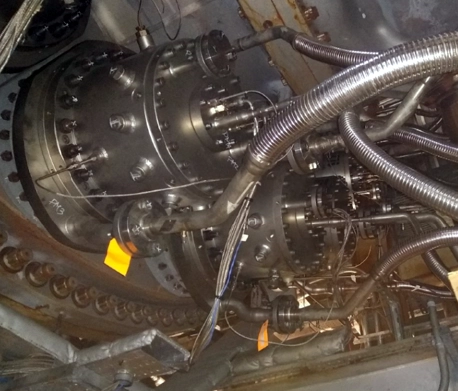
Hanwha Power’s FlameSheet combustion system holds the industry record for hydrogen co-firing in a heavy-duty gas turbine: 60% hydrogen by volume at baseload with single-digit NOx and CO emissions, achieved on a Frame 7E at the Hanwha/TotalEnergies site in Daesan, South Korea. High-pressure rig testing at DLR has demonstrated FlameSheet performance at up to 80% hydrogen. Four FlameSheet units are currently operating on hydrogen fuel blends. Hanwha Power’s development roadmap targets 0 to 100% hydrogen capability without water,steam, or nitrogen diluents.
LEC III HyFlex, Hanwha Power’s low-emission combustion system, supports hydrogen/natural gas blends up to 25%, with three Frame 9E units in the Netherlands operating on hydrogen since 2018. Compatible frames: GE 7F, 7EA, 6B, 9E, Frame 5, Siemens/Westinghouse 501F, and OPRA OP16.
Ammonia: Next-Generation Fuel Pathway
Ammonia is emerging as a practical pathway for gas turbine decarbonization because it can be transported and stored using existing infrastructure, unlike hydrogen which requires specialized high-pressure or cryogenic handling. Direct ammonia combustion produces extremely high NOx emissions (over 1,000 ppm), making it impractical for power generation. Hanwha Power’s approach uses cracked ammonia: ammonia is split into hydrogen and nitrogen in a cracking process, then combusted in a modified FlameSheet system. The cracking process can be powered by gas turbine waste heat,improving overall system efficiency. Hanwha Power conducted high-pressure rig testing with cracked ammonia at the DLR German Aerospace Center under engine-representative conditions. A new MicroMixer combustor design was developed specifically for cracked ammonia’s fuel properties (gas injection holes were upsized threefold).
Testing results: Reliable ignition and flame stabilization with cracked ammonia Single-digit NOx emissions with low combustion dynamics,no flashback or lean blowout Sub-3 ppm NOx achieved at Mode 4 without water or steam injection Successful transition from 100% natural gas to 100% cracked ammonia while maintaining stability
Hanwha Power has also partnered with Baker Hughes and Hanwha Ocean to develop a 100% ammonia-capable gas turbine (~16 MW class) for maritime propulsion, targeting deployment onboard LNG carriers and container ships by 2028. Hanwha Power is developing the combustion system for this program.
Refinery Off-Gas: Decarbonize with What You Already Have
Refinery off-gas (ROG) contains hydrogen and other combustible gases that are traditionally flared at petrochemical and refining sites. Hanwha Power’s FlameSheet combustion system turns this waste stream into a power source. FlameSheet’s wide fuel flexibility (30% Modified Wobbe Index range) accommodates the variable composition of ROG without hardware changes. As environmental regulations tighten and flaring is reduced globally, ROG-to-power conversion offers refineries an immediate, practical pathway to lower site emissions while generating value from a waste product. ROG integration is available today for existing FlameSheet installations across B-, E-, and F-class gas turbines.
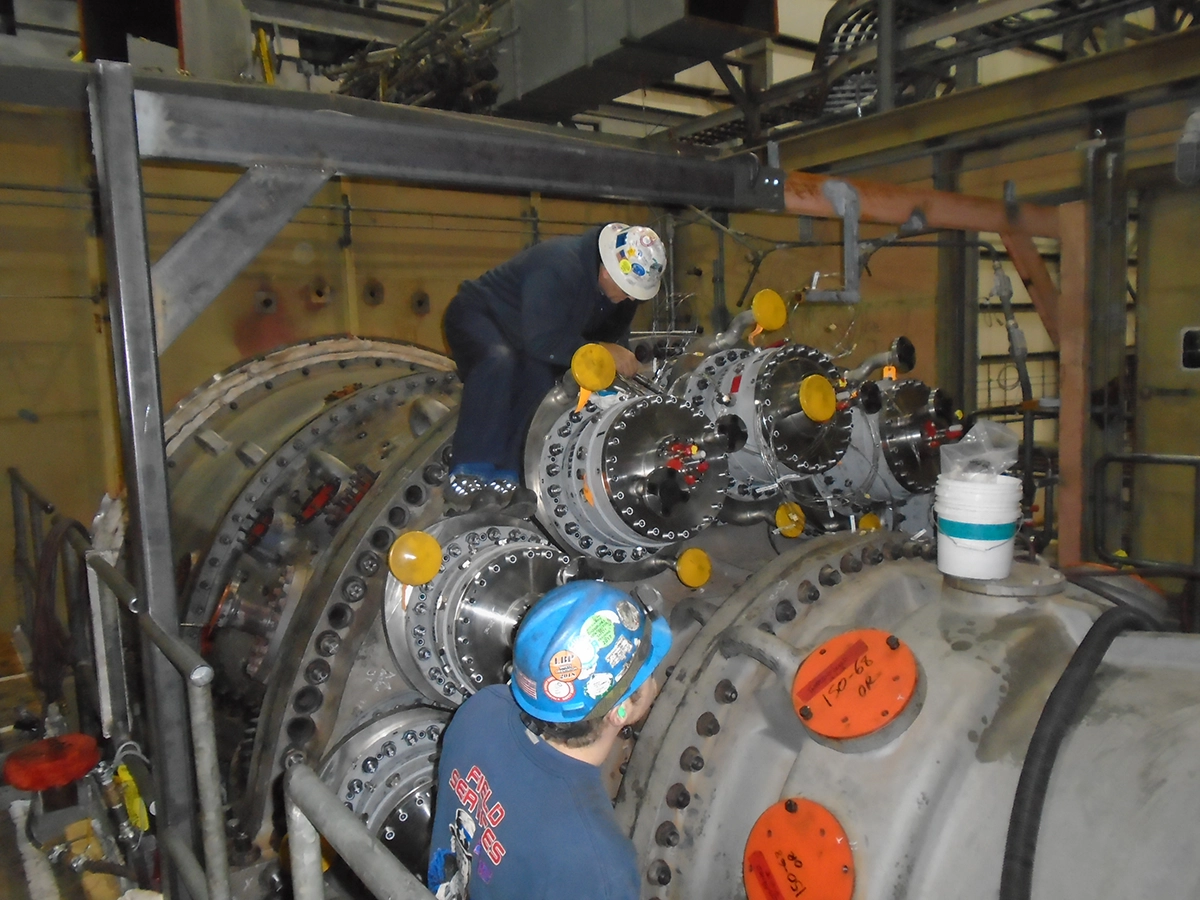
Hanwha Power Combustion Technologies for Alternative Fuels
- FlameSheet: Up to 60% H2 (industry record), cracked ammonia tested at DLR, ROG compatible, ethane,propane, butanes, LNG, shale gas. 33 units installed.
- LEC III HyFlex: Hydrogen/natural gas blends up to 25%, operating on 9E units in the Netherlands since 2018. 100+ systems installed.
- AutoTune: Automated combustion control that manages varying fuel compositions in real time, essential for variableH2/ammonia/ROG blending.
Discover Your Savings with the Hanwha Power Hydrogen and CO2 Decarbonization Calculator
The Hanwha Power Hydrogen and CO2 Decarbonization Calculator is designed to help you estimate the potential cost savings and carbon dioxide (CO2) reductions for your heavy-duty industrial gas turbines.
How will hydrogen or other alternative fuels impact your power plant’s carbon emissions?
Find out now by using our cost-saving and CO2 reduction calculator. Click the link below to get started:
How Hanwha Power Converts Gas Turbines for Alternative Fuel Operation
- Assess turbine compatibility: Analyze the turbine’s design, materials,combustion system, and operating parameters to determine the best fuel pathway(hydrogen, ammonia, ROG, or blends) for your site conditions and decarbonization goals.
- Modify fuel system: Adapt the existing fuel supply system for alternative fuel blending and delivery. This may include hydrogen fuel skids,ammonia cracking systems (powered by turbine waste heat), or ROG supply integration.
- Upgrade combustion system: Retrofit or install a Hanwha Power FlameSheet™ or LEC III™ combustion system, paired with AutoTune for automated fuel-composition management.
- Test and commission: Systematically test the upgraded turbine across the operating envelope to validate safety, emissions performance, and fuel transition capability.
Hanwha Power's team of specialized engineers and technicians guides customers through the conversion process. A comprehensive assessment of the plant and decarbonization goals determines the scope of the conversion.
Take the first step towards a cleaner, more efficient energy future by exploring our gas turbine solutions. Contact us to learn how we can help power your operations while reducing your carbon footprint.
Learn More:
Download the Clean Energy Brochure (PDF)
Hanwha Power in the News

Hanwha Power discusses gas turbine clean energy solutions during interview at World Hydrogen Week Conference 2025
Hanwha Power’s Vice President of Clean Energy, Jeff Benoit, was recently interviewed during the World Hydrogen Week Conference Conference in Milan, Italy where he discussed fuel flexibilty of retrofits like FlameSheet™ to meet emmision guidelines…

Completion of Gas Turbine Modifications for Hydrogen Co-firing at Linden Gas Thermal Power Station
JERA Co., Inc. (“JERA”) has completed modification of the gas turbine at Linden Gas Thermal Power Station Unit 6 in the United States to enable the use of hydrogen…
read more
Korea Western Power Company, Tallgrass, and PSM to Collaborate on Utility Scale Decarbonization
KOWEPO, Tallgrass, and Power Systems Mfg, LLC (PSM) today announced their agreement to collaborate on key infrastructure investments for the conversion of natural gas-fired power generation to clean hydrogen…
read moreVisit Hanwha Power at these upcoming Conferences/Events

March 23-27, 2026
CERAWeek 2026
Hilton Americas-Houston & George R. Brown Convention Center
Houston, Texas
Hanwha Power Speaker - Jeff Benoit, V.P. Clean Energy
Alternative Fuels andDecarbonization FAQs
Hanwha Power’s combustiontechnologies support a wide range of alternative fuels. FlameSheet can burnhydrogen (up to 60% by volume at baseload, industry record), natural gas, LNG,ethane, propane, butanes, shale gas, and refinery off-gas (ROG). FlameSheet hasalso been successfully tested with cracked ammonia at the DLR German AerospaceCenter. LEC III HyFlex supports hydrogen/natural gas blends up to 25% hydrogen.Both systems operate within a wide fuel composition range without hardwarechanges.
Yes. Hanwha Power retrofitsexisting gas turbines with FlameSheet or LEC III HyFlex combustion systems toenable hydrogen co-firing. The conversion process includes assessing turbinecompatibility, modifying the fuel system for hydrogen blending and delivery,installing the new combustion system, and testing and commissioning. FlameSheethas demonstrated 60% hydrogen at baseload on a Frame 7E and up to 80% inhigh-pressure rig testing. Four FlameSheet units are currently operating onhydrogen fuel blends.
Yes. Hanwha Power hasdeveloped a MicroMixer combustor design for cracked ammonia, validated throughhigh-pressure rig testing at the DLR German Aerospace Center. Testingdemonstrated reliable ignition, single-digit NOx emissions, stable operation,and successful transition from 100% natural gas to 100% cracked ammonia.Cracked ammonia eliminates the need for hydrogen purification, reducing capitalcosts. Hanwha Power has also partnered with Baker Hughes and Hanwha Ocean todevelop a 100% ammonia-capable gas turbine for maritime propulsion, targetingdeployment by 2028.
Direct ammonia combustionburns ammonia as-is in a gas turbine, but produces extremely high NOx emissions(over 1,000 ppm) that can only be controlled within a narrow operating window.Cracked ammonia splits ammonia into hydrogen and nitrogen before combustion,offering much better emissions control. Hanwha Power’s MicroMixer combustoruses cracked ammonia and achieved sub-3 ppm NOx in testing at DLR,demonstrating that this approach can deliver ultra-low emissions while usingammonia as the primary fuel source.
Yes. Hanwha Power’sFlameSheet combustion system supports refinery off-gas (ROG) as a fuel source.ROG, which contains hydrogen and other combustible gases, can be utilized ingas turbines instead of being flared, turning a waste stream into a powersource while reducing site emissions. FlameSheet’s wide fuel flexibility (30%Modified Wobbe Index range) allows it to accommodate the variable compositionof ROG without hardware changes.
Explore Hanwha Power Technologies and Services
Ready to explore decarbonization options for your gas turbine fleet?
Contact Hanwha Power to discuss your fuel availability, emissions targets, and conversion timeline. Whether you’re starting with hydrogen blending, evaluating ammonia, or integrating refinery off-gas, Hanwha Power’s engineering team can assess the right pathway for your site.
Discuss Your Decarbonization Pathway
